SL Moves to Unlock Climate Finance Through Forest Emissions Benchmark
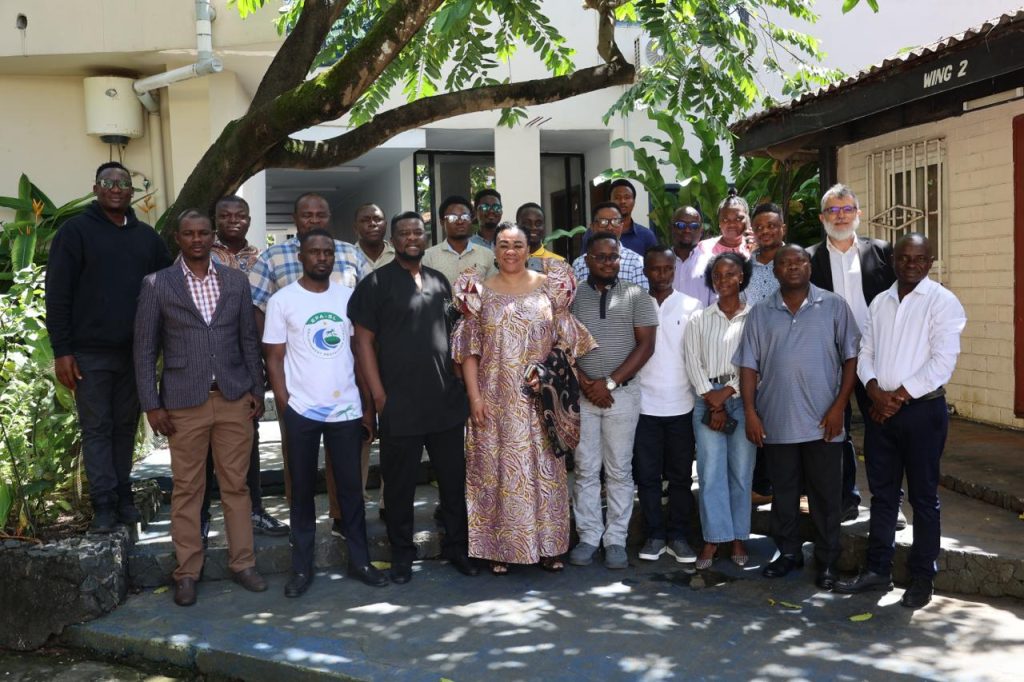
FREETOWN — Sierra Leone has taken a significant step towards accessing international climate finance following the validation of the methodology for its first Forest Reference Emission Level (FREL), a critical benchmark that will enable the country to measure forest-related emissions and removals and qualify for results-based climate funding.
Developed under the Support to Sustainable Forestry in Sierra Leone Project, the FREL combines data from the National Forest Inventory (NFI) and the National Forest Monitoring System (NFMS), providing one of the most comprehensive assessments of the country’s forest resources in decades.
The validation process is aimed at ensuring the accuracy, transparency and credibility of the methodologies, assumptions and data sources that will underpin Sierra Leone’s forest emissions reporting and future climate finance applications.

Speaking at the validation workshop, Director of Forestry, Mrs Kate M. B. Karemo-Garnett, said the exercise was providing government institutions, technical experts and development partners with an opportunity to review and validate the methodologies and data used in developing the country’s FREL.
She explained that the process involved assessing country-specific emission factors for biomass and dead organic matter, alongside activity data generated through forest monitoring systems and satellite imagery.
Particular attention, she noted, was being given to validating methodologies for calculating emissions and removals resulting from deforestation, forest degradation, enhancement of forest carbon stocks and reforestation.
“By relying on nationally generated data rather than global default values, Sierra Leone is establishing a more accurate, transparent and credible basis for reporting emissions and demonstrating future reductions,” she said.

During the workshop, international FREL consultant Esther Mertens outlined the requirements and process for submitting Sierra Leone’s FREL to the United Nations Framework Convention on Climate Change (UNFCCC).
She also highlighted opportunities for the country to access climate finance through the Reducing Emissions from Deforestation and Forest Degradation (REDD+) mechanism and other results-based funding arrangements.
Mertens presented preliminary FREL analysis based on National Forest Inventory data and facilitated technical discussions on the methodologies, assumptions and emissions estimates that will inform the country’s final FREL report.
The workshop is expected to produce validated methodologies, agreed data sources and assumptions, technical materials for the FREL report, and a roadmap for Sierra Leone’s submission to the UNFCCC.
Participants are also strengthening their understanding of the Intergovernmental Panel on Climate Change (IPCC) guidelines and greenhouse gas reporting requirements, which are essential for ensuring the credibility and consistency of the country’s forest emissions data.
Once submitted and technically assessed, the FREL will provide Sierra Leone with an internationally recognised benchmark against which future reductions in forest-sector emissions can be measured.
Beyond meeting international climate reporting requirements, the benchmark is expected to strengthen sustainable forest management, support national climate action and position the country to access much-needed international climate finance for forest conservation, restoration and other environmental initiatives.
The development is particularly significant as Sierra Leone seeks to strengthen its climate resilience, protect forest resources and attract funding to support sustainable development and environmental conservation.