Hon. Tawa Calls for Sweeping Revenue Reforms, Protection of Indigenous Businesses
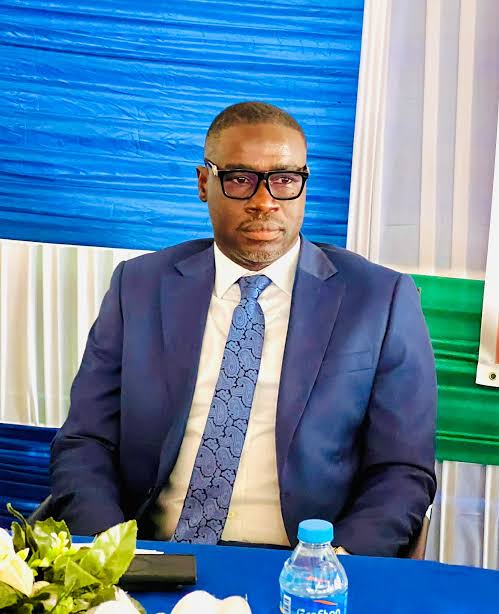
The Deputy Speaker of the Sierra Leone Parliament, Hon. Ibrahim Tawa Conteh, has called for comprehensive reforms in revenue mobilisation, customs administration and the management of duty waivers and concessions, while urging the Government to protect indigenous businesses and strengthen accountability in public institutions.
Hon. Conteh made these remarks on Thursday, 26th November 2026, during the parliamentary debate on the Finance Bill, 2027, in the Chamber of Parliament.
In his contribution, the Deputy Speaker expressed concern over several provisions of the proposed Finance Act, particularly those relating to customs clearance procedures, clearing and forwarding agents, duty concessions and revenue collection. He stressed the need for Government to understand the challenges importers face during the clearance process before imposing additional charges or penalties.
On the proposed financial requirements for clearing and forwarding agents, Hon. Conteh questioned the arrangement of depositing bank guarantees with commercial banks, suggesting that such funds could instead be placed with the Central Bank to provide greater benefits to the State. He further proposed increasing the guarantee from Le75,000 to Le150,000, rather than the proposed Le25,000.

Addressing institutional challenges at the National Revenue Authority (NRA), he called on the Ministry of Finance and the Commissioner-General to address internal disagreements and strengthen institutional unity, noting that divisions within the Authority could undermine effective revenue mobilisation.
The Deputy Speaker also raised concerns over what he described as the abuse of duty waivers and concessions granted to Ministries, Departments and Agencies (MDAs) and private companies. He called for a comprehensive schedule of all concessions granted, particularly those that may have been approved without the requisite parliamentary scrutiny. He maintained that Parliament must exercise its constitutional responsibility in examining agreements and concessions involving public revenue.
He further urged Parliament to review concession agreements to establish whether the State was losing revenue through the introduction of subsequent agreements while earlier concessions remained valid.
On indigenous business development, Hon. Conteh called for policies that would protect Sierra Leonean entrepreneurs against unfair competition from financially stronger foreign companies. While acknowledging the importance of foreign investment, he emphasised that local traders, transport operators, women entrepreneurs and indigenous investors must have equal opportunities to participate in the national economy.
He also highlighted concerns surrounding cargo manifests and Bills of Lading, urging greater transparency and proper verification whenever amendments are made to shipping documents. He warned against practices that could create opportunities for manipulation during customs clearance.
On revenue leakages, the Deputy Speaker called on the Government to strengthen enforcement mechanisms and recover outstanding payments owed by companies and institutions. He argued that increasing taxes on ordinary citizens should not take precedence over collecting revenue already owed to the State.

Hon. Conteh also renewed his call for the expansion of electronic payment systems across commercial establishments, supermarkets and public institutions. According to him, digital transactions would improve transparency, reduce human interference and minimise revenue leakages by ensuring that payments are properly recorded and transferred into Government accounts.
He further called for the effective implementation of existing legislation governing clearing and forwarding operations, adequate institutional support for relevant agencies and greater encouragement of indigenous investment in the maritime and port sectors.
Turning to the energy sector, the Deputy Speaker cautioned that the introduction of smart meters alone would not resolve the challenges facing electricity consumers. He called for improved supervision, accountability and better employment arrangements for workers responsible for meter operations, electricity connections and disconnections to prevent unofficial payments and exploitation of consumers.
Despite raising these concerns, Hon. Conteh acknowledged the efforts of the Minister of Finance in strengthening the country’s financial position, emphasising that constructive criticism and parliamentary scrutiny were necessary to improve economic governance.
He concluded by reaffirming Parliament’s responsibility to protect national interests, strengthen domestic revenue mobilisation, promote indigenous businesses, support local investment and ensure accountability in the management of public resources.
He assured the Minister of Finance of Parliament’s continued willingness to support policies and reforms aimed at improving Sierra Leone’s economic performance.