SLPHA Delivers Results Under Askia Bio

The Queen Elizabeth II Quay in Freetown is increasingly becoming a symbol of transformation and efficiency, shedding its long-standing reputation for delays, congestion, and operational inefficiencies. Under the leadership of Director General Yankuba Askia Bio, the Sierra Leone Ports and Harbours Authority (SLPHA) has embarked on an ambitious reform agenda that is repositioning the Port of Freetown as one of West Africa’s fastest-improving maritime gateways.
For years, the port faced challenges ranging from lengthy vessel turnaround times and aging infrastructure to administrative bottlenecks that affected trade and economic activity. Today, however, stakeholders across the maritime and logistics sectors point to significant improvements in service delivery, operational efficiency, and financial performance.
Since assuming office as Director General, Bio has championed reforms aimed at modernizing port operations, enhancing revenue generation, improving infrastructure, and strengthening institutional accountability. These efforts have not only increased confidence among port users but have also contributed to the broader national agenda of economic growth and trade facilitation.
A Technocrat at the Helm
Yankuba Askia Bio’s appointment was widely viewed as a strategic move by the Government of Sierra Leone to bring technical expertise and professional experience to the management of the country’s most important maritime facility.
With an extensive background in logistics, procurement, supply chain management, and port operations, Bio built his professional reputation through key roles at UNICEF, Bolloré Africa Logistics, and the Sierra Leone Ports and Harbours Authority itself. His experience in both international and domestic logistics environments provided the foundation for the reforms he would later introduce at the port.
Upon taking office, Bio inherited the challenge of transforming a critical national asset into a more efficient, competitive, and commercially viable institution capable of supporting Sierra Leone’s growing trade ambitions.
Delivering Results Through Reform
One of the most notable indicators of the Authority’s improved performance has been its financial contribution to the national treasury.
Between 2023 and 2025, the Sierra Leone Ports and Harbours Authority reportedly delivered approximately US$19 million in dividends to the Government of Sierra Leone. The achievement reflects strengthened revenue collection mechanisms, improved operational management, and a more disciplined financial framework.
The Authority’s enhanced financial performance has demonstrated the economic potential of well-managed public institutions and underscored the strategic importance of the maritime sector to national development.
Operational improvements have also been significant. Vessel turnaround times have reportedly been reduced to less than 48 hours, a development welcomed by shipping lines, freight forwarders, importers, and exporters who rely on the efficient movement of cargo.
Reduced waiting times translate directly into lower shipping costs, faster cargo clearance, and improved competitiveness for businesses operating in Sierra Leone.
Security and compliance standards at the port have also improved considerably. Enhanced adherence to international maritime security requirements has strengthened the port’s reputation and increased confidence among international shipping operators.
At the same time, critical infrastructure rehabilitation projects have improved the functionality of key facilities within the port environment. Longstanding staff welfare concerns have also been addressed, contributing to improved morale and productivity among employees.
“Efficient ports drive economic growth,” a freight forwarder operating at the quay observed. “Bio has moved us from waiting weeks to clearing in days.”

Driving Modernization and Expansion
A central pillar of Bio’s leadership has been the modernization of port operations and the expansion of maritime infrastructure to meet future demand.
Recognizing that global trade increasingly depends on efficiency, technology, and connectivity, the Authority has pursued partnerships and initiatives aimed at bringing international best practices to Sierra Leone’s maritime sector.
Among these efforts is the ongoing collaboration with the United Kingdom Hydrographic Office to update nautical charts and strengthen navigational safety around Sierra Leone’s waters. Accurate hydrographic data is essential for safe vessel movement, improved maritime planning, and enhanced operational efficiency.
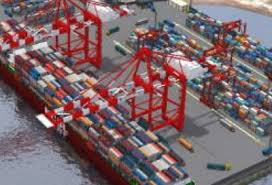
The Authority is also pursuing plans for additional berthing facilities and the development of Inland Container Depots (ICDs). These projects are expected to expand cargo-handling capacity, reduce congestion at the main port, improve logistics networks, and support the growing demands of international trade.
Such investments are increasingly viewed as essential to positioning Sierra Leone as a competitive destination for shipping, trade, and industrial development.
Growing International Recognition
The progress achieved under Bio’s leadership has not gone unnoticed beyond Sierra Leone’s borders.
His contributions to maritime development and port management recently earned him the Africa-UK Most Outstanding Personality in Port Operations and Management Award, a recognition that reflects both his personal leadership and the broader institutional reforms taking place at the Authority.
The Port of Freetown itself is also attracting growing attention as one of Africa’s improving container ports, with stakeholders pointing to operational gains, infrastructure improvements, and stronger management systems as key drivers of its resurgence.
For many observers, the recognition serves as validation of the reforms being implemented and demonstrates the potential for African ports to become more competitive through strategic leadership and institutional transformation.
Supporting National Economic Growth
The importance of these achievements extends well beyond the port itself.
As Sierra Leone seeks to diversify its economy, expand exports, attract foreign investment, and strengthen regional trade links, the efficiency of its primary maritime gateway becomes increasingly critical.
Ports serve as the backbone of international commerce. They facilitate the movement of goods, connect domestic producers to global markets, support industrial development, generate employment, and contribute significantly to government revenue.
A modern and efficient port system can therefore have a multiplier effect across multiple sectors of the economy, from manufacturing and agriculture to mining, transportation, and retail trade.
The improvements at Queen Elizabeth II Quay are helping to create an environment where businesses can operate more efficiently and where investors can have greater confidence in the country’s logistics infrastructure.
Challenges and Opportunities Ahead
Despite the progress recorded, challenges remain.
Sustaining infrastructure investments, maintaining high operational standards, ensuring transparency, embracing technological innovation, and responding to growing cargo volumes will require continued commitment and strategic planning.
The maritime sector is highly competitive, and ports across West Africa are investing heavily to improve efficiency and attract shipping traffic. Maintaining momentum will therefore be essential if Sierra Leone is to consolidate its gains and strengthen its position within the regional maritime landscape.
However, the reforms undertaken under Bio’s leadership provide a strong foundation for future growth.
The Askia Bio Effect
The story of Yankuba Askia Bio’s tenure at the Sierra Leone Ports and Harbours Authority is ultimately a story of institutional transformation.
It demonstrates how technical expertise, strategic vision, disciplined execution, and effective leadership can turn a critical public institution into a driver of national development.
The transformation of Queen Elizabeth II Quay is not merely about faster cargo clearance or improved financial performance. It is about strengthening Sierra Leone’s competitiveness, improving trade facilitation, attracting investment, and creating opportunities for economic growth.
As the country continues its journey toward economic modernization, the evolving success of its principal maritime gateway stands as a reminder that well-managed institutions can play a decisive role in shaping national progress.
The “Askia Bio Effect” therefore represents more than port reform—it symbolizes the power of effective leadership to unlock potential, deliver results, and position Sierra Leone for greater participation in the global economy.