Africell Opens Telemarketing Centre for the Blind, Expands Inclusive Employment Drive
By Staff Writer
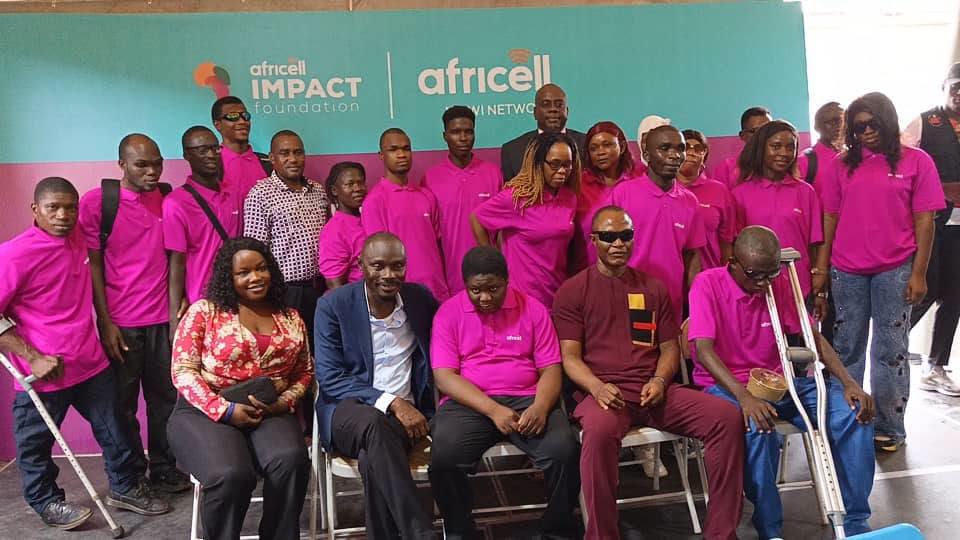
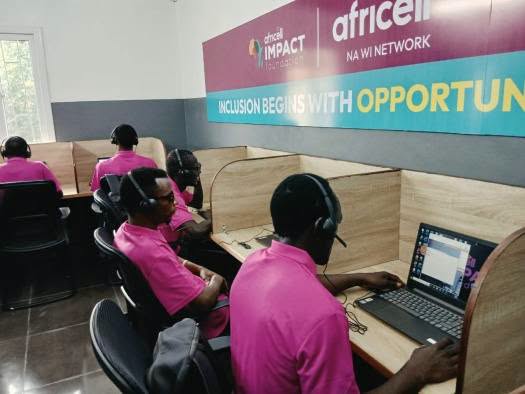
Africell Sierra Leone, through the Africell Impact Foundation, has reinforced its commitment to disability inclusion by officially opening a state-of-the-art Telemarketing Centre at the Milton Margai School for the Blind on Wilkinson Road in Freetown, creating new employment opportunities for persons with visual impairments.
The facility, which was formally commissioned on Tuesday, 28 July 2026, is designed to provide vocational and technical training while equipping visually impaired students and graduates with practical telemarketing and customer service skills that will enable them to secure sustainable employment and achieve greater economic independence.
The initiative forms part of Africell’s broader corporate social responsibility agenda, which seeks to promote inclusion by investing in programmes that empower persons with disabilities through education, skills development, and long-term employment opportunities rather than short-term assistance.
Speaking during a fireside chat at the launch ceremony, Dr. Fatu Taqi of Africell described the Telemarketing Centre as a significant milestone in the company’s journey from charity-based interventions to sustainable empowerment.
She said the project demonstrates Africell’s belief that disability should never be equated with inability, stressing that persons with disabilities possess enormous talent and potential when provided with the right opportunities and enabling environment.
According to Dr. Taqi, the private sector has a critical role to play in breaking down barriers that prevent persons with disabilities from participating fully in economic and social life.
She urged employers across Sierra Leone to move beyond stereotypes and outdated perceptions by recognizing the abilities, resilience, and professional capabilities of persons with disabilities.
“This initiative is about creating opportunities that enable people to earn a living with dignity and demonstrate their capabilities,” she emphasized.
Also speaking at the event, Maseray Brima Lavalie, Liaison Officer to the Presidential Adviser on Social Welfare and Inclusion, described inclusion as the creation of equal opportunities rather than an act of charity.
She noted that genuine inclusion requires removing barriers to education, employment, accessibility, and participation while ensuring that persons with disabilities are able to contribute meaningfully to national development.
She commended Africell for demonstrating practical leadership in advancing disability inclusion and expressed hope that similar initiatives would be adopted by other private sector institutions.
According to Lavalie, the Government remains committed to strengthening policies that protect the rights of persons with disabilities while working closely with development partners and the private sector to expand opportunities for education, skills training, entrepreneurship, and employment.
Chief Executive Officer of Afrimoney, Martison Obeng Agyei, said the Telemarketing Centre was established with the objective of creating sustainable employment rather than providing temporary support.
He explained that the project was inspired by the determination, talent, and potential demonstrated by students and graduates of the Milton Margai School for the Blind.
He described the initiative as another example of Africell’s commitment to creating lasting social impact by investing in programmes that transform lives and promote economic empowerment.
Mr. Agyei stressed that true inclusion begins with equal opportunity, calling on employers throughout Sierra Leone to provide persons with disabilities with equal access to employment, fair treatment in the workplace, and equal pay for equal work.
He further reaffirmed Africell’s commitment to expanding its partnership with the school and encouraged businesses, institutions, and development organizations to invest in initiatives that promote inclusive employment and economic participation.
Principal of the Milton Margai School for the Blind, Sallieu Turay, described the Telemarketing Centre as a landmark achievement not only for the school but also for disability inclusion in Sierra Leone.
He disclosed that the initiative has already created employment opportunities for 24 persons with disabilities, including current students, graduates, and vocational trainees, enabling them to earn an income, develop professional experience, and contribute to the country’s economy.
According to the Principal, the project clearly demonstrates that blindness is not a limitation when individuals are provided with quality education, appropriate training, and meaningful employment opportunities.
He described the Telemarketing Centre as the first initiative of its kind in Sierra Leone and expressed optimism that it would inspire other organizations to replicate the model by investing in programmes that promote inclusive employment and skills development.
Representing the Minister of Social Welfare, Director John Conteh commended Africell and the Africell Impact Foundation for demonstrating outstanding corporate leadership through an initiative that promotes dignity, independence, and economic participation for persons with disabilities.
He reaffirmed the Government’s commitment to protecting and advancing the rights of persons with disabilities through improved access to education, vocational training, healthcare, and decent employment opportunities.
Director Conteh also called on other private sector companies to emulate Africell’s example by creating inclusive workplaces and investing in programmes that empower vulnerable groups to become active contributors to national development.
The commissioning of the Telemarketing Centre marks another significant milestone in Sierra Leone’s efforts to promote disability inclusion and inclusive economic growth.
Beyond creating employment, the centre is expected to provide ongoing professional training, strengthen digital and communication skills, and prepare visually impaired young people for careers in customer service, sales, and other technology-enabled sectors.
Stakeholders at the launch expressed confidence that the initiative will not only improve the livelihoods of its beneficiaries but also help reshape public perceptions about disability by demonstrating that, with the right support and opportunities, persons with visual impairments can excel in the modern workplace and make valuable contributions to Sierra Leone’s social and economic development.