APC Rejects Key Constitutional Reform Proposals as Abdul Kargbo Defends FPTP System in Parliament
By Staff Writer
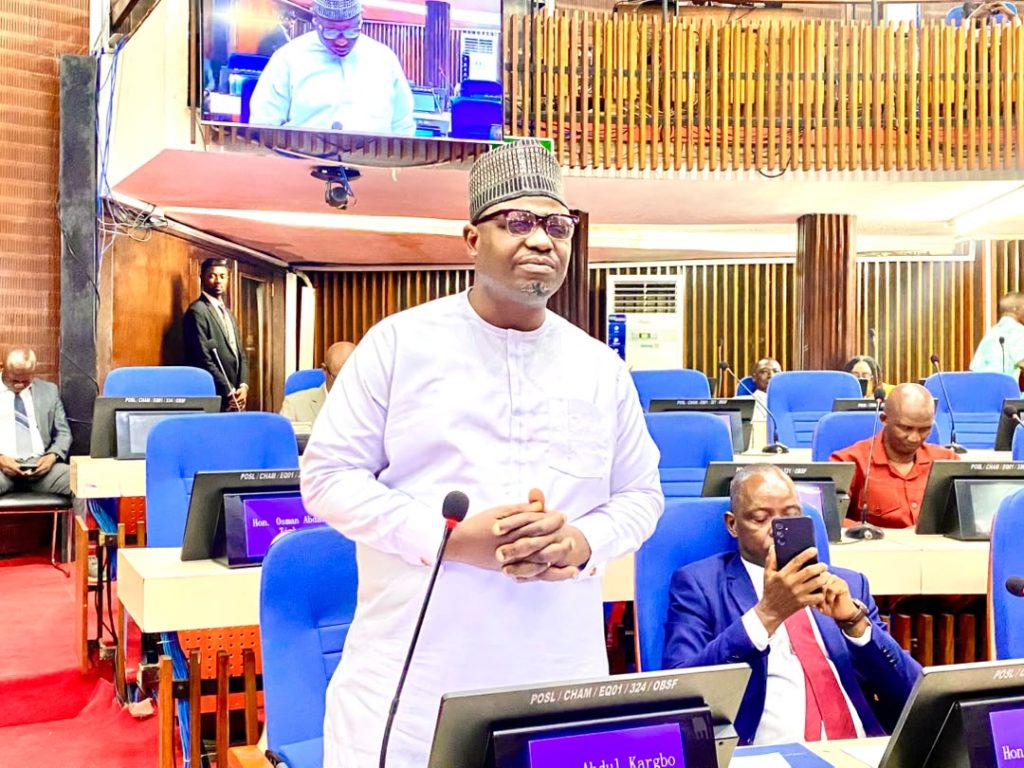
The Leader of the Opposition in Parliament, Hon. Abdul Kargbo, has mounted a robust defence of Sierra Leone’s First-Past-the-Post (FPTP) electoral system while reaffirming the All People’s Congress (APC)’s firm opposition to several key provisions contained in the proposed Constitution of Sierra Leone Amendment Bill, 2025.
Delivering a detailed and wide-ranging contribution during Tuesday’s parliamentary debate, Hon. Kargbo maintained that although the APC supports meaningful constitutional reforms, the party would not endorse amendments that, in its view, depart from previously agreed national recommendations or weaken democratic accountability.
His remarks came during one of the most closely watched parliamentary debates in recent years, as Members of Parliament continued deliberations on legislation that seeks to introduce sweeping reforms to Sierra Leone’s 1991 Constitution. The debate follows months of public consultations and recommendations arising from both the Justice Edmond Cowan Constitutional Review Committee and the Tripartite Committee established after the country’s post-election political dialogue.
Questions Over Departure from Tripartite Recommendations
At the heart of Hon. Kargbo’s argument was what he described as significant inconsistencies between the recommendations agreed during national consultations and the provisions now contained in the constitutional amendment bill.
He questioned why the Bill proposes that a presidential candidate should be elected by a simple majority of valid votes cast, provided the candidate secures at least 20 percent of the votes in two-thirds of Sierra Leone’s voting districts, instead of the 50 percent plus one threshold that he said had previously been discussed during consultations.
The Opposition Leader also challenged the reduction of the district-based requirement from 25 percent of the votes in at least half of the districts to 20 percent in two-thirds of the districts, arguing that Parliament deserved a clear explanation for the changes.
“If both parties agreed to these recommendations, why are they not reflected in the Bill before Parliament?” Hon. Kargbo asked.
He rejected suggestions that the APC was acting in bad faith by opposing aspects of the Bill, insisting that the party’s concerns stem from the fact that several agreed recommendations had not been faithfully incorporated into the legislation now before Parliament.
According to him, recommendations emerging from consultation processes do not automatically acquire the force of law and remain subject to Cabinet approval and legislative drafting before being presented to Parliament.
Strong Defence of First-Past-the-Post Electoral System
Hon. Kargbo devoted a significant portion of his address to defending Sierra Leone’s constituency-based First-Past-the-Post electoral system, arguing that it remains the most effective mechanism for ensuring accountability between elected representatives and the electorate.
He said the FPTP system creates a direct relationship between Members of Parliament and their constituents because every MP represents a clearly defined geographical constituency.
Under such a system, he noted, citizens know exactly who represents them and can hold that individual accountable for development, advocacy and legislative performance.
By contrast, he argued, proportional representation (PR) weakens that bond by concentrating greater influence in the hands of political party leadership, which determines the order of candidates on party lists.
According to Hon. Kargbo, the shift away from constituency representation reduces the ability of ordinary citizens to directly reward or punish individual legislators through the ballot box.

Independent Candidates and Smaller Parties
The Opposition Leader further argued that the First-Past-the-Post system has historically created political space for independent candidates and smaller political parties to gain parliamentary representation whenever they command genuine grassroots support.
He reminded Parliament that previous legislatures included independent Members of Parliament and representatives of minor political parties, demonstrating the inclusiveness of the constituency-based electoral model.
“In the previous Parliament, independent candidates and several political parties were represented. Under the current proportional representation system, that opportunity has virtually disappeared,” he stated.
He warned that continued reliance on proportional representation could reduce political diversity by making it increasingly difficult for candidates outside the major political parties to secure seats in Parliament.
Development Depends on Governance, Not Electoral Systems
Responding to arguments that countries using proportional representation often rank higher on the Human Development Index (HDI), Hon. Kargbo dismissed what he described as an overly simplistic comparison.
He argued that national development is driven by effective governance rather than the type of electoral system adopted.
According to him, countries achieve higher levels of human development because they invest in quality education, accessible healthcare, sound economic management, independent institutions, credible electoral systems, respect for the rule of law and strong public confidence in government.
He noted that several countries operating proportional representation systems also rank among the lowest on global development indices, demonstrating that electoral models alone cannot guarantee national progress.
“Development is determined by good governance and effective institutions, not simply by whether a country adopts proportional representation or First-Past-the-Post,” he argued.
APC Reaffirms Commitment to Women’s Political Participation
Hon. Kargbo also rejected suggestions that the APC opposes increased political participation by women.
He reminded Parliament that the APC has already entrenched a 30 percent quota for women in its own party constitution and was among the political actors that supported the enactment of the Gender Equality and Women’s Empowerment legislation.
According to him, achieving greater female representation does not depend solely on the electoral system but rather on the commitment of political parties to nominate more women for elective office.
“The issue is not the electoral system. Political parties can nominate at least 30 percent women under either system,” he told Parliament.
He maintained that both First-Past-the-Post and Proportional Representation are capable of delivering greater gender inclusion if political parties genuinely commit themselves to promoting women candidates.

Views of Paramount Chiefs and Civil Society
The Opposition Leader also referenced submissions made during the constitutional review process by the Council of Paramount Chiefs, stating that many chiefs supported retaining the constituency-based electoral system because it provides stronger local accountability and broader opportunities for independent candidates.
He further cited consultations involving civil society organisations and local councils, noting that several stakeholders similarly favoured the continuation of First-Past-the-Post elections.
Hon. Kargbo argued that Parliament should carefully consider those submissions alongside the recommendations of constitutional review bodies to ensure that any reforms reflect the broad aspirations of Sierra Leoneans.
Concerns Over Census Provision
Another issue highlighted by the Opposition Leader was a proposed constitutional clause restricting the use of any national population census conducted less than two years before a general election.
He cautioned that such a provision could inadvertently encourage governments to postpone constitutionally required population censuses for political reasons.
According to him, the Constitution envisages periodic national censuses as an essential tool for national planning, development and electoral boundary reviews.
He therefore urged Parliament to avoid adopting provisions that could undermine that constitutional obligation or create uncertainty regarding future electoral processes.
Commitment to Constitutional Reform
Despite the party’s objections to several provisions, Hon. Kargbo stressed that the APC remains committed to constructive constitutional reform.
He said the party supports amendments that strengthen democratic governance, improve accountability and command broad national consensus, while opposing provisions it believes could weaken democratic safeguards.
He called for every clause of the Bill to be subjected to transparent parliamentary scrutiny and open voting to ensure that each proposal is considered on its individual merits.
“We are prepared to support provisions that strengthen our democracy and oppose those we believe undermine the will of the people,” Hon. Kargbo declared.
Before concluding his address, the Opposition Leader commended Speaker of Parliament Rt. Hon. Segepoh Solomon Thomas for presiding over the proceedings with fairness, impartiality and strict adherence to the Standing Orders.
He expressed confidence that the constitutional amendment process would continue in a manner that upholds transparency, respect for parliamentary procedure and Sierra Leone’s democratic values.
As debate on the Constitution of Sierra Leone Amendment Bill continues, Hon. Kargbo’s intervention has further sharpened the national conversation surrounding electoral reform, governance and constitutional change. With the Government determined to advance what it describes as “generational reforms” and the Opposition insisting on fidelity to earlier consensus, the coming stages of the legislative process are expected to remain closely watched by political stakeholders, civil society organisations and the wider public.