Social Welfare Committee Engages Anti-Trafficking Agency
By Abdul Rahman Bah
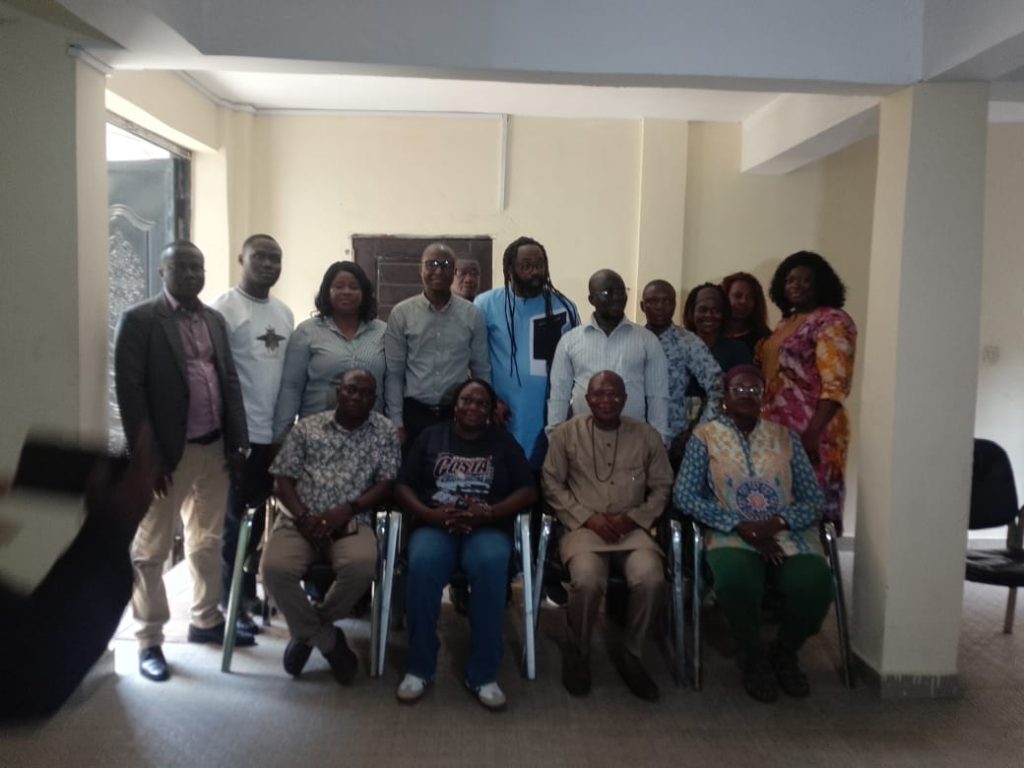
The Parliamentary Oversight Committee on Social Welfare on Thursday, September 10, 2026, engaged the Anti-Trafficking in Persons Task Force Secretariat at No. 24 Old Railway Line, Tengbeh Town, Freetown, as part of a familiarization exercise to understand the institution’s operations, achievements, challenges and the wider national response to human trafficking.
Deputy Chairperson of the Committee, Hon. Hawa Conteh, clarified that the engagement was not a witch-hunt, but a familiarization meeting intended to enable Committee members to understand firsthand the work of the Secretariat, assess the difficulties confronting the institution and identify areas where stronger government intervention may be necessary.
She stressed that the Committee’s objective was to engage constructively with the agency and understand the realities facing officials responsible for combating trafficking, protecting victims and coordinating investigations and prosecutions.
Presenting the Secretariat’s 2026 institutional update, Chief Executive Dehunge J. P. Shiaka said the agency operates as a coordinating mechanism bringing together government ministries, law-enforcement institutions and other stakeholders to prevent human trafficking, identify and protect victims, investigate suspected cases and support the prosecution of alleged offenders.
He said the institution’s mandate goes beyond rescuing victims, covering public education, community mobilisation, stakeholder training, victim referrals, livelihood assistance, investigations, prosecution coordination and the collection of trafficking-related data.
Shiaka said community awareness remains critical because trafficking often begins with deception, poverty, unemployment, irregular migration and false promises of employment.
The Secretariat therefore uses media campaigns and community outreach to educate citizens about the dangers of trafficking and the warning signs associated with suspicious recruitment and migration arrangements.

The agency also provides social protection and livelihood support to vulnerable individuals and families as part of its efforts to reduce the economic conditions that can make people susceptible to traffickers.
Shiaka disclosed that 55 victims of human trafficking are currently receiving livelihood and economic empowerment support, comprising nine girls, four boys, 40 women and two men.
The beneficiaries are located in shelter facilities and communities within the Western Area and Kambia District.
The support is being implemented through ECOWAS assistance channelled through the International Organization for Migration.
Shiaka stressed that support to victims does not end when they leave shelters. The Secretariat also provides reintegration assistance and follows up with beneficiaries for several months to help them rebuild their lives and reconnect with their families and communities.
However, he acknowledged that reintegration remains challenging because victims can relocate after receiving assistance, making long-term monitoring difficult.
The Committee also heard that international cooperation has become an increasingly important component of Sierra Leone’s anti-trafficking efforts.
Shiaka disclosed that 17 Sierra Leonean trafficking victims were repatriated from The Gambia this year, comprising 12 men and five women.
Two additional victims, a man and a woman, were repatriated from the United Arab Emirates through similar cooperation.
Last year, the country also repatriated 26 Sierra Leoneans from Myanmar and Cambodia, including five from Myanmar and 21 from Cambodia, after they were reportedly lured by fake online employment opportunities and trapped in scam compounds where they were subjected to forced criminality.
The agency also worked with authorities in Guinea to repatriate 14 Sierra Leonean citizens, mainly children.

Shiaka said the Secretariat is currently working with anti-trafficking authorities in The Gambia to develop a memorandum of understanding on cross-border cooperation. The agreement is expected to strengthen the identification, safe return and reintegration of suspected trafficking victims.
The revelations demonstrate that human trafficking is no longer limited to traditional forms of exploitation. Traffickers are increasingly using social media, online job advertisements and international migration routes to target vulnerable citizens.
The situation poses a particular threat to young people searching for employment opportunities abroad.
The Committee was also informed of several cases involving suspected victims intercepted at border points.
On April 16, police in Kabala intercepted 21 suspected trafficking victims, comprising eight girls, six boys, three women and four men, who were reportedly travelling through Guinea towards an unknown destination.
On June 3, police in Kailahun intercepted another 68 suspected victims, including 45 vulnerable children, nine women and four men.
The group was reportedly attempting to use Guinea as a transit route towards an unknown destination, raising fears that they could have been exposed to sexual exploitation, forced labour or other forms of trafficking.
Shiaka urged communities not to ignore suspicious movements or recruitment activities.
He said citizens should learn to identify the “red flags” of trafficking and report suspected cases before vulnerable persons are moved across borders or trapped in exploitative situations.
To encourage reporting, the Secretariat operates the 13423 Freedom Line, a toll-free hotline available on Africell, Orange and QCell networks.
Members of the public can report suspected trafficking incidents through the hotline, while the agency also has a digital application designed to capture and analyse SMS, voice and call information associated with trafficking reports.
But one of the strongest concerns emerging from the engagement was the lack of adequate personnel to operate the anti-trafficking system across the country.
Shiaka disclosed that there are currently no active dedicated staff deployed in the districts to coordinate anti-trafficking activities.
Although district task forces have been established, the Secretariat lacks sufficient personnel to maintain consistent operations and monitoring outside Freetown.
The agency is therefore seeking the recruitment of 16 task-force officers who could be deployed through the Ministry of Social Welfare’s existing district structures.
The proposal is intended to strengthen the Secretariat’s presence without necessarily requiring the creation of separate offices across the country.
Shiaka warned that the absence of dedicated personnel in districts could weaken the national response, particularly in communities located along border routes.
Trafficking cases can develop rapidly, with victims recruited in one district, transported through another and taken across an international border within a short period.
Without officers on the ground, opportunities to identify and stop such movements may be lost.
The staffing problem also affects investigations and prosecutions.
Shiaka told the Committee that the Directorate responsible for investigation and legal affairs requires additional officers, including paralegal personnel, to support investigations and monitor trafficking-related prosecutions.
He called for stronger cooperation between the Secretariat, the Sierra Leone Police and the Law Officers’ Department to improve the speed and quality of investigations and prosecutions.
He argued that timely convictions are essential to securing justice for victims and deterring traffickers.
The agency is also developing new Standard Operating Procedures for trafficking investigations and guidelines for law-enforcement cooperation to promote timely and victim-centred investigation, prosecution and trial.
Another major reform underway is the development of a digitalised end-to-end Trafficking Information Management System.
The system is expected to improve data collection, information sharing and analysis among institutions involved in combating trafficking.
The project is being implemented through the International Centre for Migration Policy Development with funding from the European Union.
Shiaka clarified that the funding is implemented through the international partner rather than being paid directly to the Anti-Trafficking Secretariat.
Reliable data, he noted, is essential for understanding trafficking patterns, identifying hotspots and helping government make informed policy and resource decisions.
The Secretariat coordinates with a broad range of statutory government institutions, including the Ministries of Social Welfare, Justice, Finance, Labour, Gender, Local Government, Foreign Affairs, Health and Internal Affairs.
Other key institutions include the Office of National Security, Immigration Department, Sierra Leone Police, Human Rights Commission and Financial Intelligence Agency.
The agency also works with international and development partners including the International Organization for Migration, International Centre for Migration Policy Development, European Union and U.S. State Department.
Despite the wide network of institutions and partners, the engagement raised questions about whether the existing structures have enough resources to match the scale of the trafficking threat.
The Committee’s role will therefore be important in ensuring that identified institutional weaknesses receive follow-up attention.

Hon. Hawa Conteh’s clarification that the visit was a familiarization meeting rather than a witch-hunt underscores the importance of constructive parliamentary oversight.
However, familiarization must ultimately translate into action.
The Anti-Trafficking Secretariat has demonstrated achievements in victim repatriation, community awareness, victim support and international cooperation, but its staffing and operational gaps remain significant.
The absence of dedicated district officers is particularly concerning given the trafficking risks associated with border communities and irregular migration.
The challenge is also becoming more complicated as traffickers exploit technology and fake online employment opportunities.
Sierra Leone’s response must therefore combine stronger law enforcement with public education, economic empowerment, better data, cross-border cooperation and long-term support for survivors.
The Social Welfare Committee now has an opportunity to ensure that the concerns raised during the engagement do not remain simply part of an institutional report.
The recruitment of district officers, strengthening of investigation and legal departments, improvement of victim reintegration and development of reliable trafficking data all require sustained government attention.

Human trafficking is ultimately a crime against vulnerable people, but preventing it requires more than rescuing victims after exploitation has already occurred.
It requires identifying the warning signs early, strengthening communities, holding traffickers accountable and ensuring that vulnerable citizens have legitimate economic opportunities that reduce their dependence on risky migration schemes.
The Committee’s engagement has therefore brought the country’s anti-trafficking response under renewed scrutiny, highlighting both the progress made and the urgent gaps that must be addressed if Sierra Leone is to strengthen its protection of vulnerable citizens and effectively confront trafficking at home and across its border