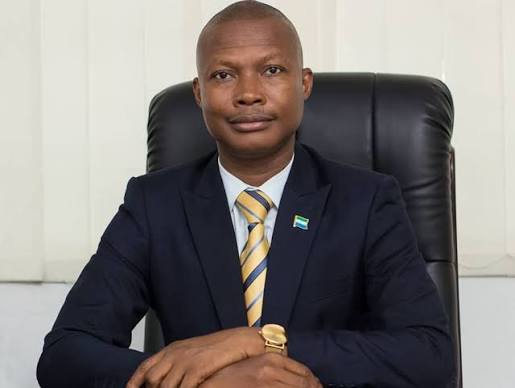
Hon. Chernoh R.M Bah Resigns as APC Deputy National Leader upholding Party Constitution and Democratic Principles

On October 10, 2023, Chernor Bah, the Deputy Political Leader of the All People’s Congress (APC), took a significant and courageous step by adhering to the stipulations set forth in his party’s 2022 constitution. By voluntarily handing over the keys to his office, Bah honored the democratic process within the APC, demonstrating his respect for the rule of law and prioritizing unity over personal ambition. This act is not merely symbolic; it is deeply rooted in the belief that the APC must embrace change and adapt if it hopes to thrive as a grassroots movement.
The APC’s 2022 constitution clearly outlines that when elections are held and the party fails to secure victory, both the political leader and their deputy are required to vacate their offices. This provision is designed to ensure a smooth and orderly transition of power, creating opportunities for new leadership to emerge—a critical factor for any political party seeking to grow and sustain itself as a dynamic entity that genuinely reflects the will of its members.
Bah’s decision to step down exemplifies his commitment to the democratic principles that underpin the APC. By respecting the constitution, he is actively paving the way for the APC to move beyond the challenges of the past and focus on its future direction. However, this honorable gesture raises important questions about the political leader, Samura Kamara, who has yet to follow suit. Kamara’s refusal to step down not only contravenes the party’s own rules but also risks plunging the APC into internal disarray, thereby stalling its capacity to emerge as a united force for meaningful change.
It is essential to acknowledge that the 2023 general elections in Sierra Leone were marred by significant irregularities and did not meet the basic standards of democracy. Nonetheless, an elected government is now in place. In this context, the notion of clinging to leadership positions within the APC no longer serves any practical purpose. The party must shift its focus towards renewal and prepare for the future, rather than become mired in an outdated struggle for “electoral justice.” This fight, which once held weight, now risks becoming a philosophical abstraction that detracts from tangible political strategies.
Chernor Bah’s actions are commendable and serve as an example of putting the interests of the party ahead of personal ambition—a quality that is increasingly rare in contemporary politics. His resignation from office signifies more than mere adherence to the constitution; it embodies a vision for the APC to evolve into a party equipped for the future, ready to engage in upcoming political battles with fresh leadership and renewed vigor. This kind of foresight and willingness to embrace change is essential for the party’s progress and survival.
Conversely, the political leader’s reluctance to follow the same path poses a real threat to the stability and integrity of the party. By holding onto power, Kamara risks alienating the very grassroots supporters he professes to represent. The APC’s future depends on presenting a united front, not one torn apart by internal disputes or led by individuals unwilling to relinquish control. Now more than ever, the APC must focus on moving forward—creating space for new leadership to emerge and establishing a platform grounded in progressive ideas that resonate with the people of Sierra Leone.
This critical juncture presents a unique opportunity for the APC’s grassroots supporters to assert their influence and reshape the party’s trajectory. Chairman Minkailu Mansaray, along with the broader party leadership, must rise to the occasion and ensure that the transition outlined in the constitution is executed. The call for unity and new faces is not merely a desire for change; it is a necessity if the APC is to remain relevant and effective in Sierra Leonean politics.
The risk of internal divisions leading to a protracted court battle is tangible and could have dire consequences. Such a conflict would not only weaken the APC but also potentially discredit its leadership in the eyes of the public. At a time when the party should be concentrating on preparing for future elections, it cannot afford to be distracted by infighting. The younger generation of APC supporters, equipped with the resources, networks, and progressive ideas necessary for leadership, must be empowered to take charge and drive the party forward.
While the concept of electoral justice remains important, it is essential to recognize its limitations. The 2023 elections are now a part of history, and despite their flaws, continuing to cling to a lost battle will only undermine the APC’s capacity to challenge the current government in the 2028 elections. The party must now redirect its focus toward rebuilding, uniting under new leadership, and crafting a platform that genuinely resonates with the citizens of Sierra Leone.
True supporters of the APC—those who understand the critical importance of democratic principles and the necessity for change—must seize this moment. The future of the party rests in the hands of individuals willing to prioritize progress over personal ambition. The next chapter of the APC should be characterized by renewal, led by a new generation of leaders capable of uniting the party and building a movement that stands for the genuine interests of the people of Sierra Leone.
The path forward is clear: respect the constitution, embrace new leadership, and focus on building a united, progressive party that is prepared to lead Sierra Leone into the future. The time for change is not just imminent; it is now.