HRCSL Launches Fact-Finding Mission into Labor Dispute at Koidu Limited Mining Company
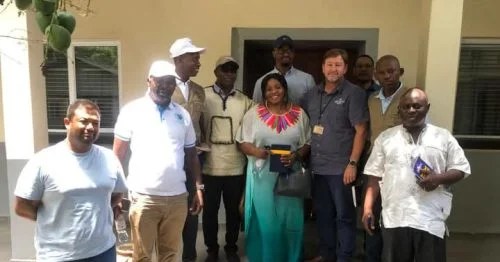
The Human Rights Commission of Sierra Leone (HRCSL), in collaboration with the Kono District Human Rights Committee (KDHRC), has launched an independent fact-finding mission to investigate a labor dispute between Koidu Limited Mining Company and its workers.
The mission, conducted in response to growing industrial unrest, aims to assess potential human rights violations, investigate workers’ grievances, and facilitate a resolution between employees and company management. Given Koidu Limited’s strategic role in Sierra Leone’s diamond mining industry, the dispute has drawn national attention, raising concerns over labor rights, corporate responsibility, and the government’s role in protecting workers.
Background: The Growing Rift Between Workers and Koidu Limited
The dispute, which has been brewing for several months, escalated into a full-scale work stoppage after employees accused Koidu Limited of multiple labor violations, including:
- Failure to provide risk allowances despite hazardous working conditions in the mines.
- Unfair and discriminatory access to clean water and sanitation facilities, with workers allegedly denied basic necessities.
- Unlawful dismissals without due process, raising concerns about job security and labor rights protections.
- Non-payment of overtime wages, violating national labor laws and international best practices.
- Fraudulent salary structures, where some employees claim they are underpaid or unfairly compensated for their work.
The workers, through their union representatives, have demanded immediate intervention, stating that they will not resume operations until their concerns are fully addressed. The standoff has affected productivity at Koidu Limited, one of Sierra Leone’s largest mining companies, prompting authorities to step in.
HRCSL’s Investigative Mission and Key Stakeholder Engagement
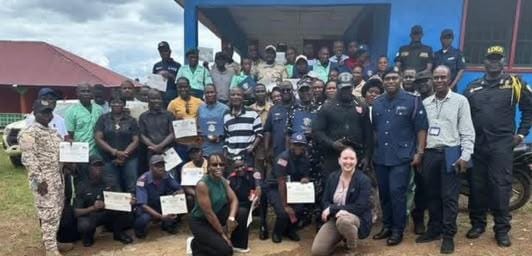
To understand the scope of the crisis, the HRCSL delegation, led by Chairperson Patricia Narsu Ndanema, held meetings with key stakeholders, including:
- Senior Section Chief of Tankoro Chiefdom, Sahr Mboma
- Members of the Kono District Human Rights Committee
- Executive members of the aggrieved Workers’ Union
- Representatives of the Sierra Leone Police
- Chairman of the Council of Paramount Chiefs in Kono, Edward Sahr Mbawa
- Senior Management of Koidu Limited Mining Company
During these engagements, Sulaiman Mansaray, Secretary General of the Workers’ Union, passionately outlined the workers’ grievances, accusing Koidu Limited of neglecting basic labor rights and failing to uphold international labor standards. He argued that the current conditions in the mines were unacceptable and unsustainable, making it impossible for workers to continue operations under such circumstances.
Koidu Limited’s Response: Management Denies Key Allegations
In response to the workers’ claims, Koidu Limited’s General Manager, Rocco Vermuelen, dismissed several allegations, stating that the labor dispute was primarily driven by political divisions within the union rather than systemic corporate malpractices.
Vermuelen attributed the crisis to the recent election of a new union executive and their decision to withdraw from the United Mine Workers Union (UMU), a move that he claimed had caused instability in labor relations. He stressed that the company remained committed to maintaining fair labor practices and had already taken steps to address some of the concerns raised by employees.
Some of the measures the company has undertaken include:
- Procuring mobile toilets to improve sanitation for mine workers.
- Engaging with the government, including the Minister of Labour, Mohamed Rahman Swaray, to seek a sustainable resolution.
- Cooperating with the First Lady’s intervention efforts, indicating the seriousness of the situation.
Despite these efforts, workers remain dissatisfied, insisting that these actions do not address core issues such as wages, risk allowances, and job security.
Government and Civil Society Responses
The growing labor unrest has prompted concern from various stakeholders, including government agencies, civil society groups, and labor rights organizations. Many observers argue that the dispute reflects broader systemic issues within Sierra Leone’s mining industry, where workers often struggle with unsafe conditions, wage disputes, and inadequate corporate accountability.
The Ministry of Labour has assured workers that it is actively engaged in discussions with Koidu Limited to ensure compliance with national labor laws. Similarly, the Kono District Human Rights Committee (KDHRC) has pledged to work closely with HRCSL to ensure workers’ rights are protected and that a fair resolution is reached.
HRCSL’s Role and Next Steps
As an independent human rights watchdog, the HRCSL has reaffirmed its commitment to a transparent and impartial investigation. The commission’s delegation includes:
- Director of Business and Human Rights and Labour Relations, Abdulai Yollah Bangura
- Director of Human Resources, Peter Abraham Koroma
- Senior Human Rights Officer, Ibrahim Tarawallie
- Human Rights Officer (East Regional Office Branch), Elvis Mambu
The HRCSL will now focus on:
- Documenting testimonies from workers, company management, and other stakeholders.
- Assessing whether the reported labor violations breach national and international labor laws.
- Recommending policy actions to the government, Koidu Limited, and labor unions.
- Publishing a detailed report that will outline the findings and suggest a roadmap for resolving the dispute.
Potential Outcomes and Implications for Sierra Leone’s Mining Industry
The outcome of this dispute could have far-reaching consequences for the mining sector in Sierra Leone. If the HRCSL finds evidence of serious labor violations, it could lead to:
- Stricter enforcement of labor laws and penalties against Koidu Limited.
- Increased government oversight in the extractive industry.
- Potential reputational damage for Koidu Limited, affecting investor confidence.
- Stronger union activism, encouraging workers in other mining companies to demand better working conditions.
Conversely, if the investigation supports Koidu Limited’s position, the company may regain control of labor relations and continue operations with minimal disruptions.
Regardless of the outcome, the dispute underscores the urgent need for clearer labor policies, improved corporate accountability, and stronger protections for workers in Sierra Leone.
Conclusion: A Defining Moment for Labor Rights in Sierra Leone
The Koidu Limited labor dispute represents a pivotal moment in Sierra Leone’s ongoing struggle for labor rights and fair employment practices. With the HRCSL taking the lead in ensuring an impartial investigation, all eyes are now on the findings and recommendations that will emerge from this process.
As stakeholders await the HRCSL report, the case remains a test of the country’s commitment to human rights, labor justice, and corporate responsibility. The resolution of this dispute could set a precedent for future labor conflicts in Sierra Leone, shaping the future of industrial relations in the mining sector.