MoICE Tables Ambitious NLe92.2 Million Budget for 2026
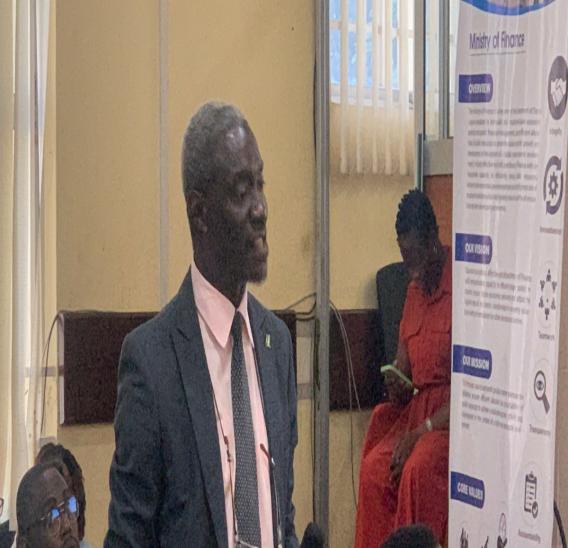
BY ABDUL RAHMAN BAH In a decisive push for transparency, national dialogue, and active citizenship, the Ministry of Information and Civic Education (MoICE) has presented a bold NLe92.2 million budget proposal for the 2026 fiscal year—exceeding its approved ceiling by more than NLe11 million. The proposal was unveiled during a high-level session at the Ministry of Finance, setting the stage for one of MoICE’s most ambitious years yet.
Justifying the increase, Emmanuel Turay, Director of Communications at MoICE, stressed that every leone requested is an investment in democratic participation, national development, and institutional transparency. He described the budget as more than a financial plan—calling it a blueprint to transform how government connects with citizens.
“This budget is not just about numbers,” Turay said. “It’s about empowering citizens with the knowledge they need to shape Sierra Leone’s future. We are laying the foundation for a more informed, engaged, and united society.”
The 2026 proposal prioritizes allocations across civic education, national outreach, media development, records management, and government communications. Central to the plan is aligning public information systems and civic platforms with President Bio’s Big 5 Agenda on education, food security, job creation, infrastructure, and governance.
One of the largest allocations is Civic Education and Engagements, at NLe20.1 million, reflecting MoICE’s sharpened focus on educating citizens about their rights, responsibilities, and opportunities to participate in governance. Significant investments are also earmarked for the Sierra Leone News Agency (SLENA), Government Information Services, and the National Archives and Records System, all designed to expand access to public information and preserve institutional memory.
Turay acknowledged that the proposal surpasses the ministry’s NLe81 million ceiling but insisted MoICE is pursuing financial sustainability through revenue generation to reduce dependence on state subventions. Projected new income sources include international media accreditation fees, SLBC commercial revenue, development partner grants, and SLENA services for both MDAs and private sector clients.
“This is not simply a spend request,” Turay explained. “It’s a clear, strategic investment in national democratic resilience—about strengthening the bridge between government and citizens, and ensuring that every Sierra Leonean is heard, informed, and empowered.”
The ministry’s ambitious funding request follows a string of 2025 achievements, including legislative progress on the National Information Policy, Film Policy, Data Protection Bill, and Civic Education Policy. Cabinet also approved the National Archives and Records Management Policy, while MoICE secured new partnerships with UNDP, UNESCO, and the Ban Ki-moon Foundation to advance digital literacy, civic education, and good governance.
Looking ahead, MoICE’s 2026 agenda includes scaling up nationwide awareness campaigns, building data-driven communication platforms, finalizing a civic education framework, implementing a national archives and records system, and enhancing monitoring and evaluation capacity for real-time service delivery tracking.
Turay closed the budget hearing with a call for national collaboration:
“Civic pride, transparency, and inclusive governance are not just government responsibilities—they are national imperatives. We invite all Sierra Leoneans to join us in making 2026 a turning point for public accountability and democratic engagement.”
The proposal now moves to Parliament for scrutiny, where legislators will weigh the ministry’s NLe11.2 million overage against national fiscal constraints. Advocates argue, however, that the long-term return on investment—measured in trust, participation, and stability—could prove immeasurable.