Salone Civic Festival: Where Government Meets the People
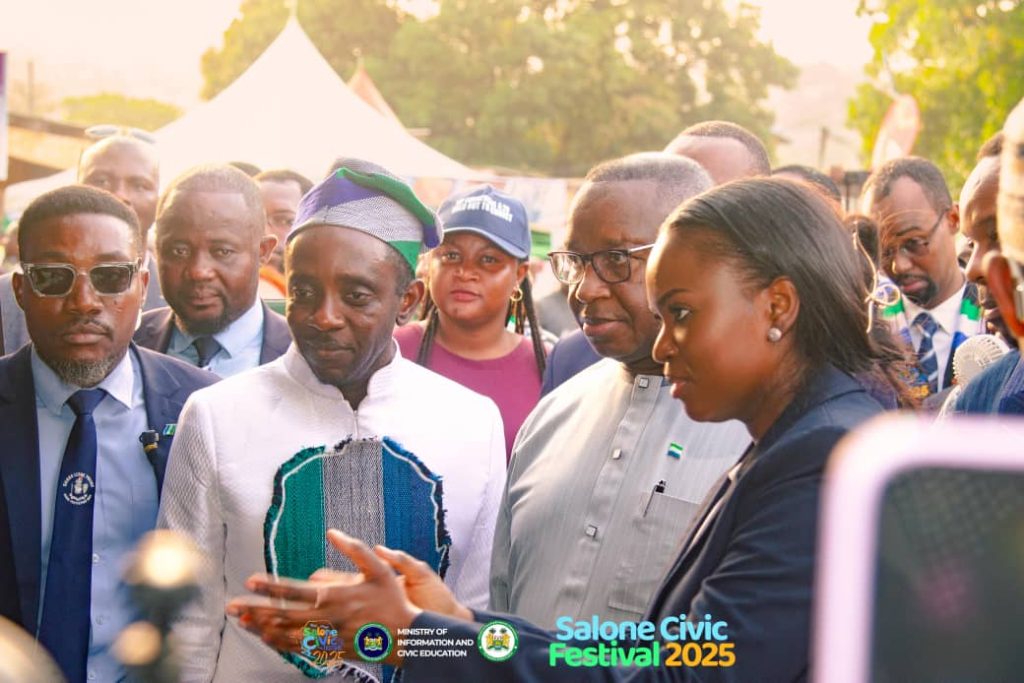
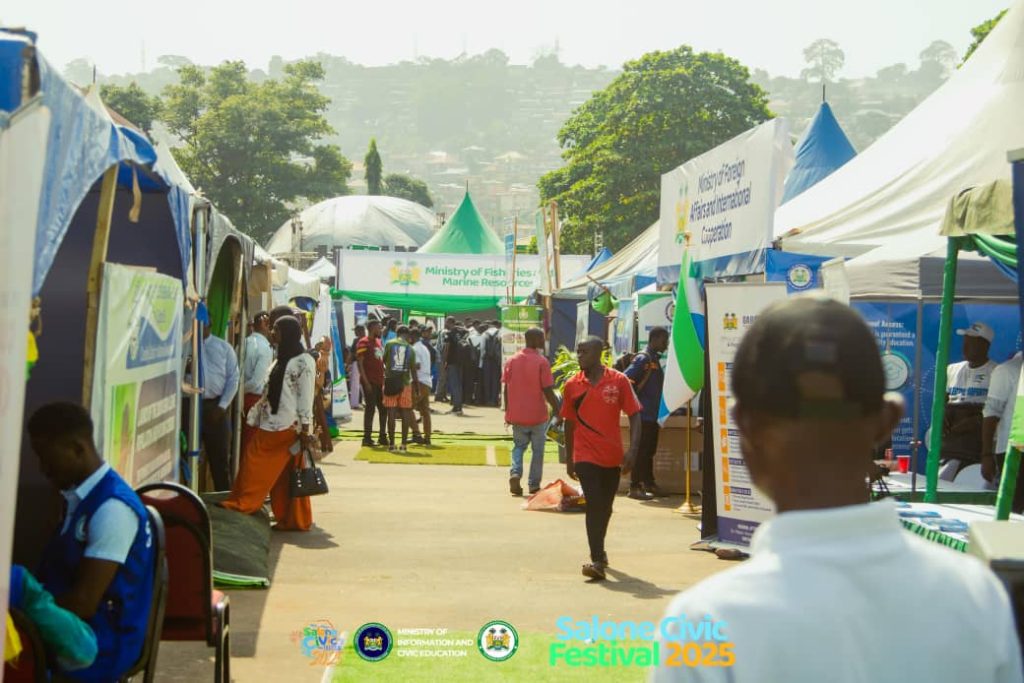
For three days in December, the usually formal surroundings of the Youyi Building precinct were transformed into a vibrant hub of dialogue, discovery, and democratic participation as over 50 Ministries, Departments, and Agencies (MDAs) gathered for the Salone Civic Festival. From December 11 to 13, citizens from all walks of life converged on the venue, not merely as spectators, but as active participants in a bold national experiment in openness and accountability.
Organised by the Ministry of Information and Civic Education, the festival represented a significant shift in how government communicates with the people it serves. Rather than issuing reports from behind office doors, MDAs stepped into the public space, presenting their achievements, challenges, and future plans directly to citizens. The MDAs’ Performance Showcase functioned as a living report card, aligning government actions with the goals of the Medium-Term National Development Plan (MTNDP) and the administration’s Big Five Game Changers.
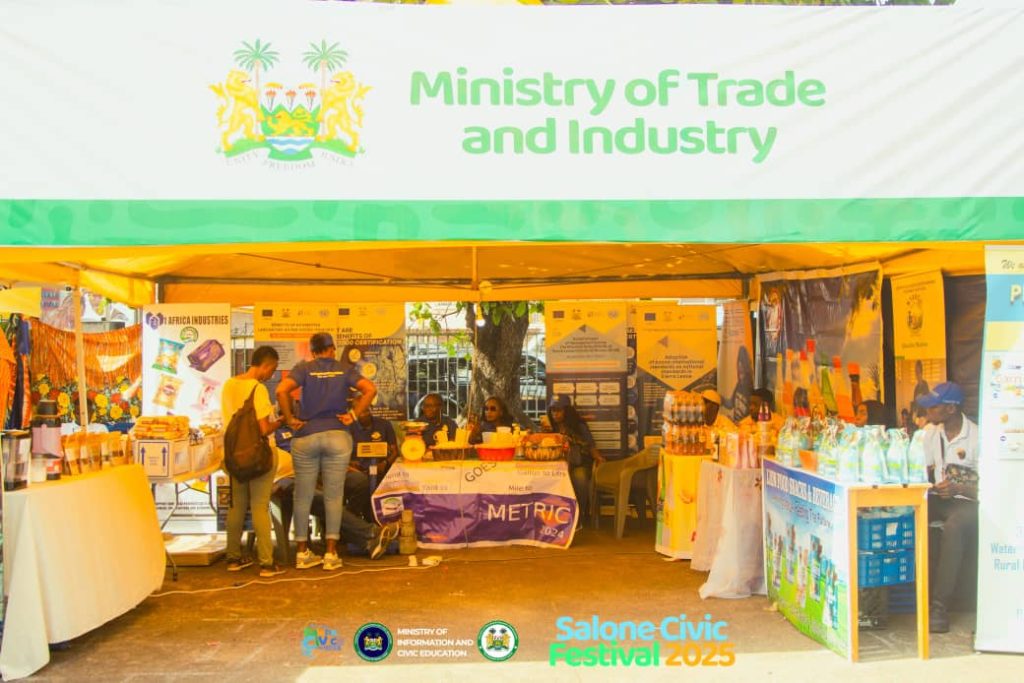
Across the festival grounds, policy was transformed into experience. Colourfully branded booths lined the precinct, each telling a story of progress in sectors central to national life—agriculture, health, security, education, finance, infrastructure, and technology. Interactive displays, charts, videos, and live demonstrations replaced dense policy documents, making governance accessible and understandable to ordinary citizens. Senior officials stood side by side with technical experts, fielding questions, clarifying misconceptions, and, in many cases, taking note of citizen concerns for follow-up action.
Few exhibits captured the gravity of state responsibility more powerfully than the Arms and Ammunition Commission booth. Here, visitors were guided through the commission’s mandate and legal procedures governing firearm ownership. The display of decommissioned weapons and a weapon-destruction machine offered a stark reminder of the government’s efforts to strengthen public safety and consolidate peace—turning symbols of violence into evidence of national stability.
Yet the festival was not only about policy and procedure; it was also a celebration of national talent and pride. The Ministry of Sports transformed its space into a lively arena where athletes demonstrated skills in football, boxing, tennis, karate, and gymnastics. Surrounding the performances, medals won by Sierra Leoneans on international stages gleamed under the lights, inspiring young visitors and reaffirming sport’s role as a unifying national force.
As host of the event, the Ministry of Information and Civic Education used the platform to highlight its growing efforts to deepen public understanding of governance. Visitors learned about weekly government press briefings, the Civic Day Series, and Presidential Town Hall engagements, all designed to bridge the gap between leadership and citizens. Of particular interest was the public display of key national policies, including a draft of the Data Protection and Right to Access Information Bill, signalling the government’s commitment to transparency, privacy, and citizens’ right to information.
The future of governance took center stage at the Ministry of Communication, Technology and Innovation booth. Young innovators showcased locally developed digital solutions aimed at improving service delivery and economic opportunity. The Directorate of Science, Technology and Innovation (DSTI) unveiled the proposed Wan-Gov platform, envisioned as a single digital gateway through which citizens could access government services. Telecommunications giants Orange, Africell, and QCell joined the conversation, engaging directly with the public and addressing service concerns—an unusual but welcome sight in a country increasingly driven by digital connectivity.
Economic resilience and food security featured prominently through the Feed Salone initiative. The Ministries of Agriculture, Trade, and Fisheries displayed locally grown crops and marine products, demonstrating progress toward reducing import dependence. A model of the proposed fish harbour at John Obey drew considerable attention, with officials explaining how the project could transform the fisheries sector, create jobs, and enhance export earnings.
In perhaps the most tangible example of service delivery, the Sierra Leone Road Safety Authority (SLRSA) brought governance to the ground by deploying its mobile licensing vehicle at the festival. Citizens watched as driving licences were processed on-site, a process that once required long queues and repeated visits. Symbolically, President Dr. Julius Maada Bio and the Chief Minister were among the first to test the service, reinforcing a message of leadership by example.
By the festival’s close, one message had resonated clearly across the Youyi Building precinct: government is strongest when it listens, explains, and engages. The Salone Civic Festival did more than display achievements—it humanised institutions, encouraged dialogue, and empowered citizens with knowledge.
In reflecting President Dr. Julius Maada Bio’s vision of a people-centred, accountable, and connected administration, the festival marked a defining moment in Sierra Leone’s democratic journey. It signalled not just an event, but a new approach to governance—one where the state steps forward, the people step closer, and the distance between policy and everyday life grows ever smaller.