Water by Jerrycan in a Growing City
By Abdul Rahman Bah
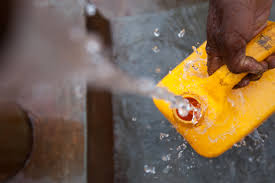
At dawn in Kissy Road, while most of Freetown is still wrapped in sleep, 52-year-old Hawa Turay is already on her feet balancing two heavy yellow jerrycans on a wooden yoke across her shoulders. By the time the first taxis begin to honk, she has walked more than three kilometres from the public standpipe near Wellington back to her crowded compound. For Hawa, fetching water is not a chore, it is a lifetime.
She began carrying water as a girl in the 1980s when Freetown’s taps rarely flowed. Decades later, the city has grown, but reliable water has not kept pace with its swelling population. On some days, the standpipe runs for only a few hours, forcing women like Hawa to queue before sunrise or walk even farther to alternative sources.
Inside her zinc-roofed home, seven people depend on the water she brings her husband, three grandchildren and two relatives displaced by flooding from Waterloo. Every drop is carefully rationed for cooking, bathing and washing. “If I don’t go, the house has no life,” she says quietly, rubbing her aching shoulders.
The strain is visible in her body. Years of lifting have curved her spine slightly forward, and her palms are permanently calloused. Yet Hawa insists she cannot stop because informal water vending is also her income. After supplying her family, she sells the remaining water to neighbours who lack time or strength to make the trek.
Freetown’s water crisis is rooted in rapid urbanization, aging infrastructure and seasonal shortages, especially during the dry months when reservoirs shrink. While the Guma Valley Water Company has expanded supply in recent years, many low-income communities still rely heavily on standpipes and water carriers like Hawa.
Despite the hardship, she finds pride in her work. Children in the compound call her “Aunty Water,” and when a neighbour falls sick, she is often the first to fetch extra water for washing and medicine. During last year’s rains, when floods swept through parts of the East End, Hawa volunteered her jerrycans to displaced families.
Her dream is simple and powerful. She hopes that one day clean water will flow directly into her home so her grandchildren will not inherit the same burden. “I don’t want them to walk like me,” she says, watching the sun rise over the Atlantic.
As Freetown debates big pipelines, climate resilience and urban planning, Hawa Turay’s daily journey reminds the city that behind every policy and project are ordinary lives carrying extraordinary weight one jerrycan at a time