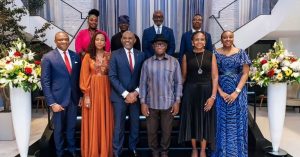
UBA NEC 2026 Crowns Young Writers.
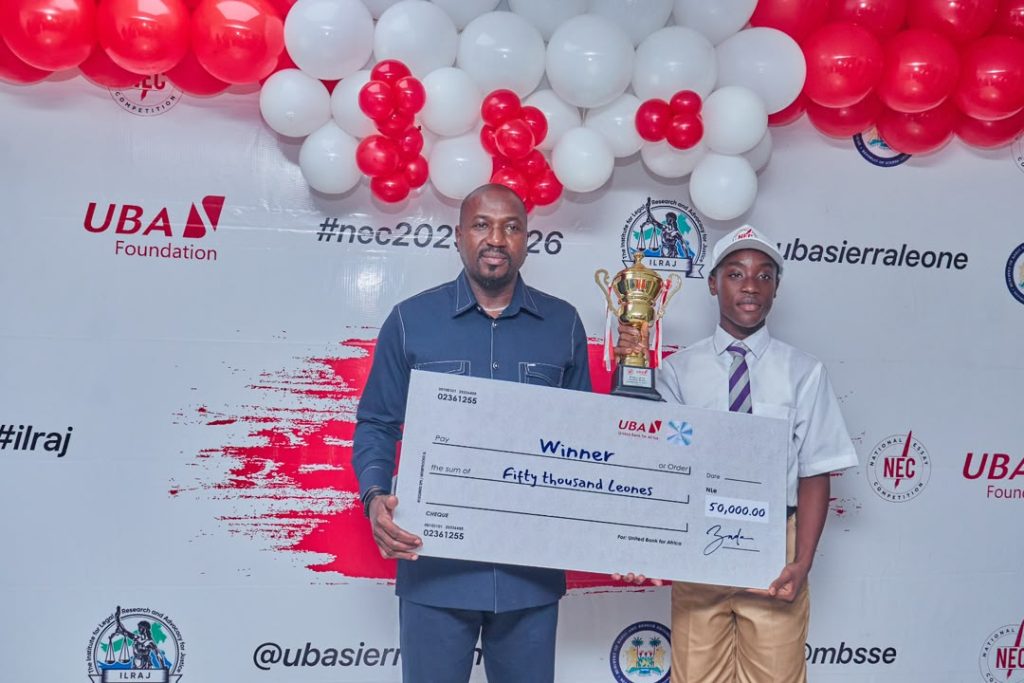
More Than an Essay: UBA Foundation NEC 2026 Celebrates Sierra Leone’s Young Voices
24 August 2026
There is something special about watching a young person stand before a room, share an idea and realise that people are listening. That was the spirit of the 5th Edition of the UBA Foundation National Essay Competition (NEC) 2026, which has continued to provide a national platform for young Sierra Leoneans to express their thoughts, demonstrate their creativity and engage with issues shaping their future.
What began with 289 essays in 2020 has grown into a significant national youth-development initiative. In 2026 alone, the competition received 518 essays, bringing the cumulative number of essays received since its introduction in Sierra Leone to 1,759.
Behind every submission was a young person who took the time to think, write, research, hope and believe that their voice mattered. Through the NEC, those voices have continued to find a platform.
A Competition Built Around Young Voices
The UBA Foundation National Essay Competition is more than a writing contest. It provides young people with an opportunity to express themselves, examine important social issues and share their perspectives on matters affecting their schools, communities and country.
For the 2026 edition, participants were presented with a subject that addressed an issue affecting children and communities across the world: “Gender-Based Violence in Schools: Its Causes, Consequences and Solutions.”
The topic encouraged participants to examine the causes of gender-based violence, understand its consequences for students and propose practical solutions for creating safer and more supportive learning environments.
It was therefore more than a writing exercise. It was an invitation for young people to think critically about safety, dignity, equality and the kind of school environment every child deserves.
Following the submission of essays, entries went through screening and evaluation, bringing together some of the strongest young writers from different parts of Sierra Leone.
From Initial Essays to the Top 24
The first stage attracted hundreds of entries from participating districts, UBA branches, the Institute of Learning and Research (ILRAJ), and the Ministry of Basic and Senior Secondary Education (MBSSE).
A total of 518 essays were received. Following the initial screening process, which included verification of eligibility and required documentation, 419 essays were confirmed eligible, while 99 were classified as non-eligible due to incomplete documentation and other eligibility requirements.
From the eligible entries, the competition progressed to the Top 24 Semi-Finalists, marking another important stage in the journey.
For the young writers who reached this stage, their achievement represented more than academic performance. It demonstrated their ability to research, analyse complex issues and communicate their ideas effectively through writing.
Semi-Finalists Challenged on Technology and Education
The Top 24 semi-finalists were presented with another thought-provoking subject:
“Technology is changing the way students learn. Discuss how technology can improve education and some of the challenges it may create for students.”
The topic required the young writers to consider both sides of the growing influence of technology on education.
They were encouraged to examine how technology can make learning more accessible, provide students with greater access to information and introduce new approaches to teaching and learning.
At the same time, they had to consider challenges such as distractions, unequal access to digital resources and other difficulties that technology may create for students.
The semi-final therefore tested not only their writing abilities but also their capacity to think critically and present balanced arguments.
The Final Question: What Kind of World Will We Leave Behind?
For the final stage, the competition moved beyond the classroom and focused on the wider environment and the future of the planet.
The finalists were asked to respond to the topic:
“Young people will inherit the world we create today. Discuss the role young people can play in protecting the environment and fighting climate change.”
It was a fitting question for a competition built around young voices.
The finalists were challenged to reflect on the future they would inherit and, more importantly, the role they can play today in shaping that future.
The topic encouraged them to look beyond their individual circumstances and consider their responsibilities to their communities, their country and the wider world.
The three topics used throughout the competition were therefore not simply essay questions. They became conversations about safety, education, technology, environmental protection and the kind of future young people want to see.
A National Journey Across Sierra Leone
The 2026 competition brought together young writers from across Sierra Leone, reinforcing the NEC’s position as a national platform for young people.
Participants came from districts including Kailahun, Kenema, Kono, Bombali, Falaba, Koinadugu, Tonkolili, Kambia, Karene, Port Loko, Bo, Bonthe, Moyamba, Pujehun, Western Area Urban and Western Area Rural.
From these communities, young writers brought different experiences, perspectives and ideas to one national platform.
Their backgrounds may have been different, but they were united by a willingness to think, write and speak about issues that matter.
By reaching the Top 24, the semi-finalists had already achieved a major milestone. They carried not only their own aspirations but also the hopes and encouragement of their schools, teachers, families and communities.

The Final Moment
As the competition reached its final stage, anticipation grew among the finalists, organisers, judges, teachers and supporters.
The young writers had come a long way, while the judges faced the difficult task of selecting the strongest performances from among talented finalists.
Eventually, the moment everyone had been waiting for arrived as the winners were announced.
Winner: Jedediah Rolyn Williams, 16, of The Sierra Leone Grammar School.
1st Runner-Up: Sia Mary Destiny Saquee, 17, of Cluny Free the Children Secondary School.
2nd Runner-Up: Alhaji Saidu Mohamed, 13, of The International School Limited.
The three winners emerged at the top of a competition that attracted hundreds of entries from across the country.
Their achievement is a testament to their courage, discipline, creativity, critical thinking and confidence.
They did not simply write essays. They demonstrated that their ideas were worth sharing and that young Sierra Leoneans have valuable contributions to make to national conversations.
A Story Bigger Than Three Winners
While Jedediah, Sia and Alhaji took the top three positions, the story of NEC 2026 goes far beyond the winners.
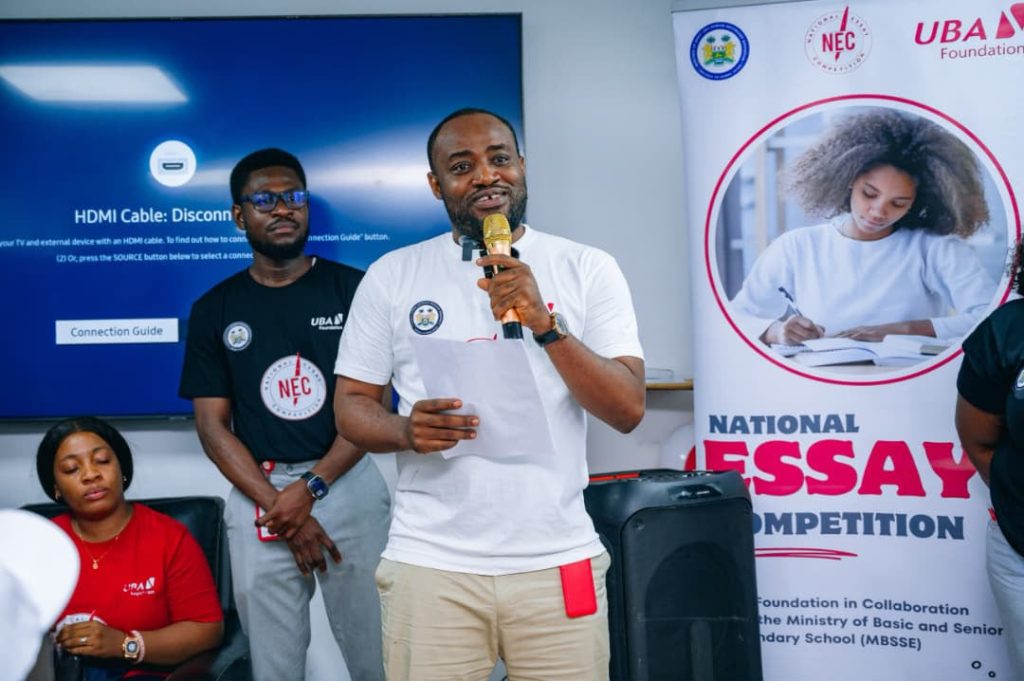
There were 518 essays submitted.
That means hundreds of young people had something to say. Each submission represented an opportunity for a young person to think deeply, develop an argument and put their ideas on paper.
To every pupil who participated but did not reach the final, the competition should not be seen as the end of the journey.
For some, it may have been their first major writing competition. Others may have been nervous or disappointed with their results.
But one competition does not define a young person’s ability.
The experience can become an opportunity to learn, improve and try again.
Write again. Learn again. Speak again. Believe in yourself again.
From 289 to 1,759: A Growing Legacy
The growth of the NEC is reflected in its numbers.
In 2020, the competition received 289 essays. By 2026, the number had risen to 518 essays, while the cumulative number of essays received since the competition began in Sierra Leone reached 1,759.
These figures represent more than statistics.
They demonstrate that increasing numbers of young people are willing to think, write, question and express their opinions when given the opportunity.
The growth also highlights the importance of creating spaces where young people can engage with issues affecting their lives and the future of their country.
This is part of what makes the UBA Foundation NEC significant.
It creates a platform where a pupil from one school can sit alongside pupils from across the country and confidently say:
“This is what I think.”
“This is what I believe.”
“This is my voice.”
What Comes Next?
The trophies will eventually find their place on shelves. The photographs will become memories, and the applause will eventually fade.
But the confidence gained, lessons learned and dreams inspired through the competition can remain with these young people for a lifetime.
Today, Sierra Leone celebrates Jedediah, Sia and Alhaji.
But it also celebrates every pupil who participated, every teacher who encouraged a student to write, every parent who offered support, every judge who contributed time and expertise, and every partner who helped make the competition possible.
Most importantly, the NEC celebrates a generation of young Sierra Leoneans who have demonstrated that the country has no shortage of ideas, talent, creativity and hope.
The Future Is Being Written Today
The young people who participated in NEC 2026 will eventually grow into tomorrow’s leaders, entrepreneurs, professionals, educators, writers, innovators and changemakers.
The ideas they shared today could become part of the solutions Sierra Leone and the world will need tomorrow.

That is why opportunities that encourage young people to think, write and express themselves remain important.
Young people must be given platforms to speak. Their ideas must be heard, their creativity encouraged and their potential supported.
Because when a country invests in young minds, it invests in its future.
Congratulations to the NEC 2026 champions.
Congratulations to every finalist.
And congratulations to every young writer who found the courage to participate.
Keep writing. Keep learning. Keep asking questions. Keep speaking. Keep believing.
Because while the essay may have ended, your story is only beginning.
Celebrating Young Minds. Inspiring Brighter Futures