Government Targets Jobs in FY2027 Budget VP Jalloh Hails Development Partners EU,IMF, World Bank
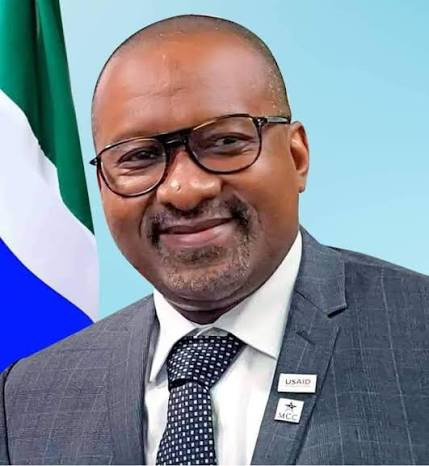
Vice President Dr Mohamed Juldeh Jalloh has called for stronger collaboration between Government and Sierra Leone’s development partners as the country begins preparations for the 2027 national budget, stressing that the scale of employment required by the country’s growing population cannot be met through Government jobs alone.
Speaking at the formal commencement of the FY2027 Budget Process at the Miatta Civic Centre in Freetown, Vice President Jalloh acknowledged the contribution of major development partners, including the World Bank, European Union (EU), International Monetary Fund (IMF) and African Development Bank (AfDB), to Sierra Leone’s development programmes and reform agenda.
He said international partnerships had supported a range of interventions, including infrastructure development, social-sector programmes, institutional reforms, technical assistance, budget support and policy dialogue.
“I particularly acknowledge the International Monetary Fund, the World Bank, the European Union and the African Development Bank, alongside our many other bilateral and multilateral partners,” Dr Jalloh said.
His remarks came as Government formally launched the FY2027 budget preparation process under a broader focus on building resilience, creating jobs and expanding the role of the private sector in economic growth. The process began with National Policy Hearings at the Miatta Civic Centre and is expected to proceed into detailed policy and budget discussions.
Government Cannot Employ Everyone
At the heart of the Vice President’s message was the challenge of creating sufficient employment opportunities for Sierra Leone’s young and growing population.
Dr Jalloh said Government employment could not provide the scale of jobs required, arguing that sustainable employment would increasingly have to come from productive economic activity outside the public sector.
“The jobs required by a young and growing population, however, cannot predominantly come from the Government payroll,” he said.
He pointed instead to the expansion of farms into viable businesses, the growth of small and medium-sized enterprises, increased manufacturing and greater investment by international companies as important sources of future employment.
The Vice President said the budget must therefore create conditions that allow businesses to start, expand, invest and employ more people.
Development Partners Shifting Focus
Dr Jalloh also highlighted what he described as an evolving nature of development cooperation.
According to the Vice President, development partners are increasingly complementing traditional development assistance with programmes designed to strengthen the private sector, improve the investment climate, expand access to finance and mobilise private capital.
He said such support could help Government create an environment in which Sierra Leonean businesses and international investors are better positioned to contribute to economic growth and employment.
The shift places greater emphasis on using development partnerships not only to finance public-sector programmes, but also to help create conditions for private investment and enterprise development.
Recent accounts of the FY2027 budget launch similarly highlight the Government’s emphasis on private-sector growth, investment, infrastructure and employment creation.

EU Partnership Reaches 50 Years
The Vice President’s recognition of the European Union comes during a landmark year in EU-Sierra Leone relations.
In May 2026, the EU Delegation officially launched activities marking 50 years of bilateral relations and development cooperation between Sierra Leone and the European Union, covering the period from 1976 to 2026.
The EU has described the partnership as having evolved over five decades from traditional development assistance into a broader strategic relationship covering areas including governance, infrastructure, education, agriculture, economic development and social services.
The golden jubilee has also been used to highlight the future direction of the partnership, including greater attention to economic growth, private-sector development and youth empowerment.
World Bank, IMF and AfDB Support
The World Bank, IMF and AfDB remain among the major multilateral institutions engaged with Sierra Leone on economic development, reforms and public-sector priorities.
The IMF, for example, has been working with the Government on fiscal and public financial management reforms, including measures aimed at improving fiscal reporting and transparency as part of preparations for the 2027 budget.
The World Bank and other development partners have also supported programmes linked to economic growth, human capital, resilience and private-sector development.
For Government, the continued engagement of these institutions provides access to financing, technical expertise and policy support as Sierra Leone seeks to address development challenges while operating within fiscal constraints.

Budget to Focus on Results
Dr Jalloh’s remarks come as Government seeks to make the FY2027 budget more closely connected to measurable economic and social outcomes.
The Vice President has emphasized that public spending should ultimately translate into tangible improvements, including productive infrastructure, better public services and stronger support for viable businesses.
The approach places job creation and private-sector participation alongside Government’s broader development priorities.
It also reflects the administration’s continued emphasis on the Big Five Game Changers, which form part of the country’s Medium-Term National Development Plan.
From Public Spending to Private Investment
The Vice President’s intervention highlights a central challenge facing Sierra Leone’s development planning: how to use limited public resources to create an environment in which private economic activity can expand.
While Government remains responsible for providing essential public services and infrastructure, Dr Jalloh stressed that long-term employment creation will require businesses, farms, manufacturers and investors to play a larger role.
His remarks therefore place private-sector development at the centre of the FY2027 budget conversation, alongside public investment and development-partner support.
As the budget process progresses, Ministries, Departments and Agencies are expected to align their proposed programmes and spending priorities with national development objectives, while discussions with development partners and other stakeholders continue.
For Government, the FY2027 budget is being positioned not simply as an annual spending plan, but as an instrument for strengthening resilience, supporting productive investment and creating the conditions for more sustainable employment opportunities across Sierra Leone.