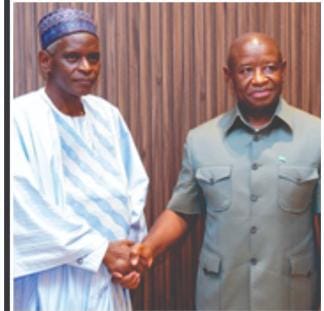
Youth Minister Champions AI Responsibility and Skills Transformation at #ISWA2025

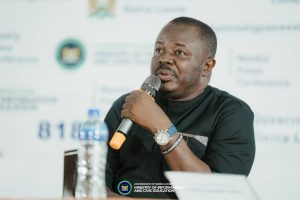
Sierra Leone’s Minister of Youth Affairs, Ibrahim Sannoh, has emerged as a leading voice at the International Skills and Workforce Alliance 2025 (#ISWA2025), where he moderated a high-level session on “Linking Industrial Skills Transformation with the Demographic Dividend and Inclusive Development.”
In his remarks, Minister Sannoh stressed the urgent need for Africa to adopt responsible Artificial Intelligence (AI) guidelines as a foundation for its digital and industrial future. He cautioned that while AI offers enormous potential, without safeguards it could deepen inequality across the continent.
“Without guidelines, AI risks empowering only the empowered. With them, we can make AI a tool for inclusion, ethics, and opportunity,” he emphasized.
Beyond technology, the Minister urged African governments and institutions to bridge the gap between academia and industry by ensuring curricula, apprenticeships, and research directly equip young people with the skills needed for the future of work. He also called for stronger continental collaboration in research and development (R&D), encouraging knowledge-sharing that enables African youth to innovate using local data and realities.
His rallying message from the summit floor struck a chord:
“Nothing for us, without us in Africa. What do we want to be remembered for? Africa should achieve self-sufficiency because, together we can!”
Minister Sannoh also reminded participants that Africa’s greatest strength lies not only in its demographic dividend but in the mindset of its youth:
“We need to work on the mind transformation. You have to be the change, you have to first change. And believe in the Africa We Want.”
For Sierra Leone, his advocacy holds special significance. By leading conversations at #ISWA2025, Minister Sannoh is positioning the country at the forefront of continental debates on skills development, innovation, and responsible technology adoption. His push for education reforms aligned with industrial needs aims to open pathways for Sierra Leonean youth—helping them secure better jobs, embrace entrepreneurship, and drive innovation in key sectors such as agriculture, digital finance, energy, and manufacturing.
His interventions painted a vision of a youthful continent, rich in resources and determined to shape its own destiny by 2063—an Africa thriving through unity, innovation, and the unstoppable energy of its young people
The head of Sierra Leone’s Transnational Organized Crime Unit (TOCU), Superintendent Mohamed Kugba Allieu, has confirmed that between February and September 2025, a total of 42 Sierra Leoneans were deported from the United States of America.
Superintendent Allieu made the statement during the regular police press briefing at the Police Officers Mess in Kingston, on Wednesday, September 10, 2025.
This wave of deportations underscores ongoing efforts by authorities to tackle issues related to illegal migration, organized crime, and national security concerns.
Illegal migration contravenes several Sustainable Development Goals (SDGs), most notably SDG 10, which seeks to reduce inequality within and among countries.

Often involving vulnerable populations seeking better opportunities without proper documentation, illegal migration can lead to exploitation and social exclusion. Moreover, it can undermine SDG 16, which promotes peace, justice, and strong institutions, by challenging the rule of law and border security.
Addressing illegal migration is part of broader efforts to promote legal and safe migration pathways, ensuring that migration contributes positively to sustainable development without exacerbating inequalities or compromising national security.
Superintendent Allieu stated that he would not disclose the names of the deportees to prevent stigmatization.
According to him, the primary reason for these deportations is illegal entry. “Based on the records we’ve received, we may likely receive up to 2,000 deportees from the US before December this year,” he revealed.
He also noted that some deportees are unable to trace their families in Sierra Leone because they left a long time ago. For those individuals, the authorities require sureties to sign on their behalf. Once this is done, they can be counseled and released.
Superintendent Allieu emphasized that there is no criminal offense associated with being deported; however, sureties are necessary before their release.
He concluded by encouraging Sierra Leoneans to love and take pride in their home country.