Private Capital, Not Charity, to Drive Africa’s Growt
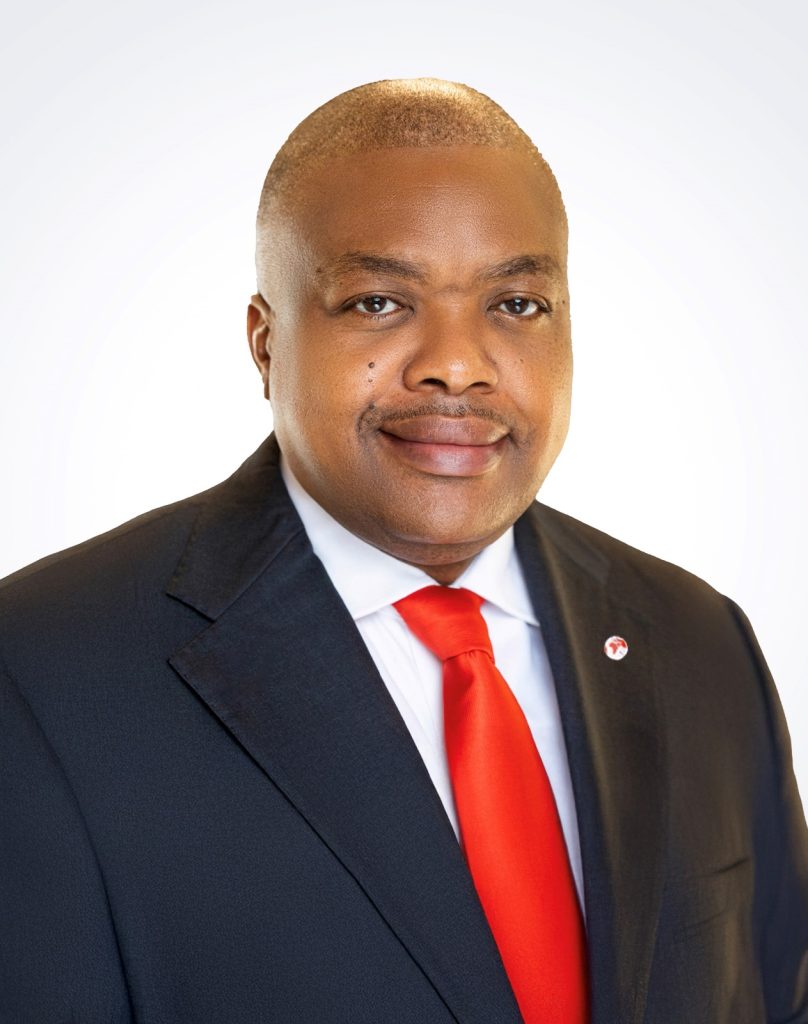
By Chiugo Ndubisi, Executive Director, Heirs Holdings
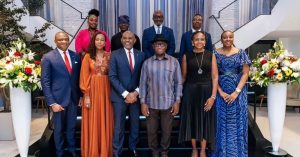
When Heirs Holdings Founder and Group Chair, Tony O. Elumelu, CFR, took the stage at the 14th Nordic–African Business Summit in Oslo, Norway, his message was direct, unapologetic, and timely: “You make your money in Africa; invest in Africa. Create jobs on the continent. Help to provide the infrastructure that we need.”
This was more than a rallying cry. It was a strategic challenge to reframe Africa–Nordic engagement from one historically anchored in aid and development assistance to one driven by enterprise, investment, and shared value creation. Mr. Elumelu’s remarks in Oslo, reinforced by his subsequent engagement with Norwegian business media, signal a potential inflection point in how Nordic economies perceive Africa—not as a humanitarian obligation, but as a partner in global growth and innovation.
Rethinking Africa Through an Enterprise Lens
For decades, Africa’s engagement with advanced economies has largely been shaped by a development narrative centred on aid, grants, and concessional financing. While such interventions have played important roles in humanitarian response and social services, they have not delivered the scale, sustainability, or economic transformation required to lift hundreds of millions out of poverty.
Africa’s future depends not on perpetual assistance, but on productive investment, job creation, and value-adding enterprises. Mr. Elumelu captured this reality succinctly when he stated: “Africa needs partners, not charity.” His argument is grounded in lived experience—one that recognises that long-term prosperity is built by competitive businesses, functioning markets, and a vibrant private sector.
At the Nordic–African Business Summit—hosted by the Norwegian-African Business Association (NABA) in partnership with Norfund, the Africa Finance Corporation, and the Norwegian Ministry of Foreign Affairs—attention was deliberately focused on agriculture, trade, energy, and infrastructure. These sectors are not only foundational to economic growth; they are also the engines through which Africa can industrialise, integrate into global value chains, and meet the aspirations of its rapidly growing population.
Africa’s Economic Reality: Scale, Momentum, and Opportunity
Africa’s economic fundamentals increasingly support an enterprise-led narrative. According to UNCTAD, foreign direct investment into Africa rose sharply from US$40.94 billion in 2020 to US$97.03 billion in 2024, representing a 24% CAGR. This surge reflects growing global confidence in Africa’s reform trajectory, consumer markets, and long-term demographic advantage.
The private sector already accounts for over 80% of Africa’s total production, approximately two-thirds of total investment, and nearly three-quarters of lending. This underscores a critical reality: Africa’s development will be determined not by governments alone, but by the ability of businesses—large and small—to scale sustainably.
In Nigeria, Africa’s largest economy by population, this trend is particularly pronounced. With 237.53 million people, Nigeria represents 15.5% of Africa’s total population. Its services sector contributes an average of 56% of GDP, driven by finance, telecommunications, technology, trade, and creative industries. These dynamics reflect a continent transitioning from subsistence to performance, scale, and competitiveness.
The Nordic Opportunity—and Responsibility
Despite these trends, Nordic investment in Africa remains modest relative to the continent’s potential. This comes at a time when other global actors—most notably China, India, and Gulf states—are deepening economic ties through infrastructure financing, energy investments, and trade partnerships.
Tony Elumelu’s message therefore resonates strongly within the Nordic context. It challenges Nordic countries to align their values—sustainability, innovation, inclusion—with their capital and technical expertise. The Nordic Africa Institute (NAI) has already acknowledged this shift in its policy recommendations, advocating a move away from donor-recipient relationships toward mutual economic partnerships based on trade, investment, and co-creation.
Countries such as Norway, Finland, and Denmark have articulated Africa strategies that emphasise green transition, renewable energy, African-led development, and multilateral cooperation. With Africa’s population projected to nearly double by 2050, engaging the continent is no longer optional—it is a strategic necessity.
Enterprise Partnerships in Practice
A compelling illustration of this new model is United Bank for Africa Plc (UBA)’s adoption of a long-term Power-as-a-Service (PaaS) agreement with Renewvia, Incremental Energy Solutions (IES), and Norwegian renewable energy investor Empower New Energy.
The project involves installing solar-and-battery hybrid systems across 25 UBA branches in five Nigerian states, delivering 1.5 MWp of solar capacity and 3.6 MWh of battery storage. The systems now generate over 166,000 kilowatt-hours of clean energy monthly, reducing carbon emissions by more than 228,000 kilograms of CO₂ per month. Upon full implementation, the initiative will cover 50 branches across 18 states, providing 3 MWp of solar power and 7 MWh of energy storage.
This initiative is significant not only for its environmental impact, but for what it represents: a commercially viable, private-sector-led partnership, co-financed by Nordic capital and executed through African enterprise. As Svein Bæra, Norwegian Ambassador to Nigeria, observed, “This partnership is a shining example of what can be achieved when African ambition meets Nordic investment and innovation.”
Implications for Policy, Capital, and Society
The implications of this shift are profound. For African governments, the priority must be to strengthen regulatory certainty, improve transparency, and ensure that investment frameworks promote local participation and value retention. For investors, Africa is increasingly a destination defined by opportunity rather than risk alone.
For development institutions and civil society, enterprise-led investment is not a departure from social impact—it is the pathway to achieving it at scale. Job creation, infrastructure development, climate resilience, and progress towards the Sustainable Development Goals (SDGs) are all accelerated when private capital is mobilised responsibly.
For Heirs Holdings, the renewed Nordic interest in Africa aligns seamlessly with Africapitalism—the philosophy that Africa’s transformation must be driven by long-term investments that generate both economic returns and social value.
A Call to Action
By 2050, Africa’s population will reach 2.47 billion, representing more than one-quarter of the world’s population, while the continent faces an annual infrastructure financing gap of US$130–170 billion. Bridging this gap will require far more than aid—it will require enterprise, partnership, and scale.
For Nordic businesses, Africa offers growth, relevance, and the opportunity to shape the future of sustainable development. For Africa, the imperative is clear: lead with confidence, build partnerships on equal terms, and convert opportunity into prosperity.
When enterprise replaces charity, and partnership replaces patronage, inclusive, resilient, and enduring prosperity becomes achievable. Heirs Holdings remains firmly committed to advancing this vision—for Africa, and for a global economy that recognises Africa as a full and equal partner in progress.